Reliable pest control service in McKinney safeguards residential structures from invasive insect colonies, destructive rodent populations, and intense seasonal biological pressure without forcing homeowners into binding annual contracts. Properties situated along expansive blackland prairie soil formations and riparian drainage corridors frequently encounter persistent incursions from subterranean termites, aggressive roof rats, and resilient German cockroaches seeking conditioned air and plumbing moisture.
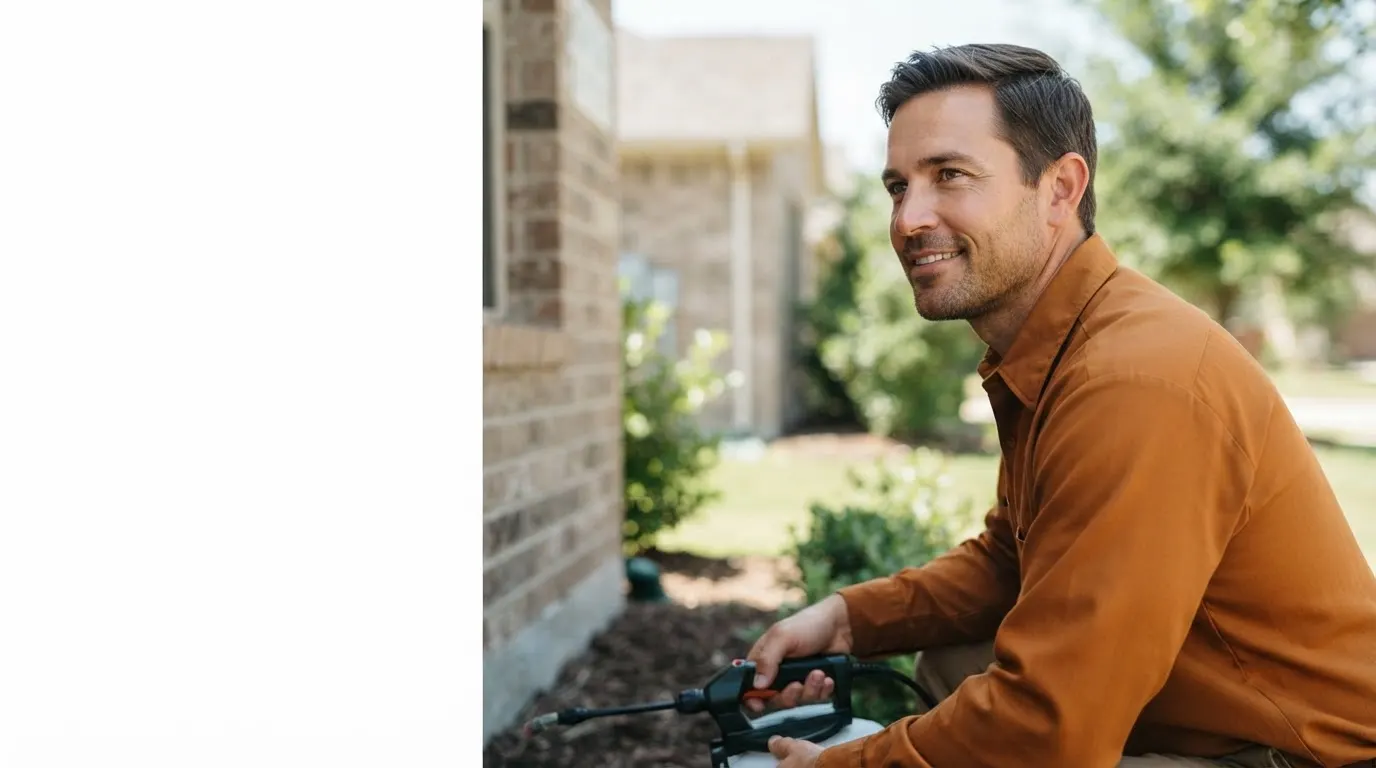
Pest Control Service in McKinney is an integrated pest management and domestic restoration discipline that identifies active insect or rodent infestations, eradicates nesting colonies, and seals residential structural entry points across Collin County properties.
Every service reflects the same meticulous attention to detail, whether it's a single job or a larger pest control service project across McKinney.
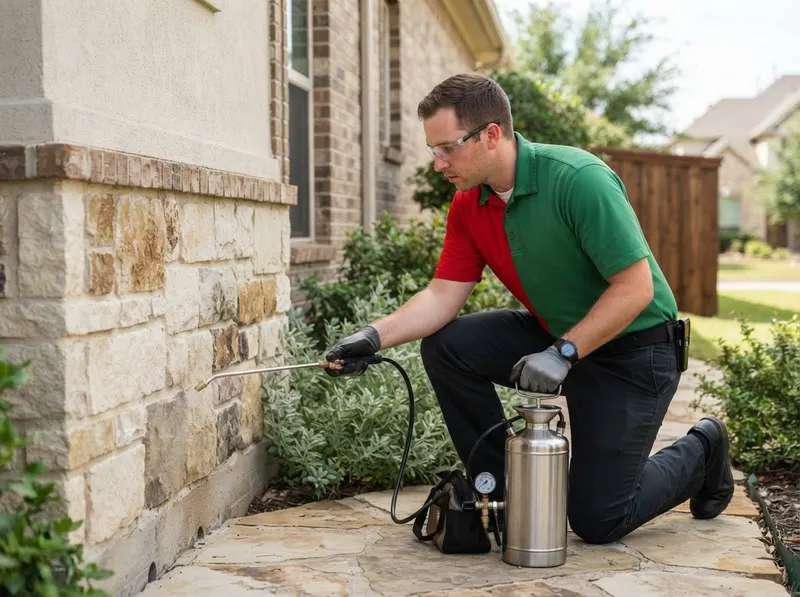
Single-incident targeted knockdown designed for severe immediate infestations including wood-destroying ants, interior paper wasp nests, and sudden carpet beetle outbreaks. Service focuses entirely on interior cavity flushing and perimeter saturation without recurring service contracts. Technicians locate active focal zones inside walls, mechanical closets, and subfloors, applying specialized non-repellent formulations that neutralize the breeding cluster directly. The process includes a thorough physical evaluation of plumbing penetrations, attic chases, and exterior masonry gaps to identify immediate vulnerabilities, providing immediate knockdown and clear structural guidance without requiring recurring billing agreements.
Get a quote →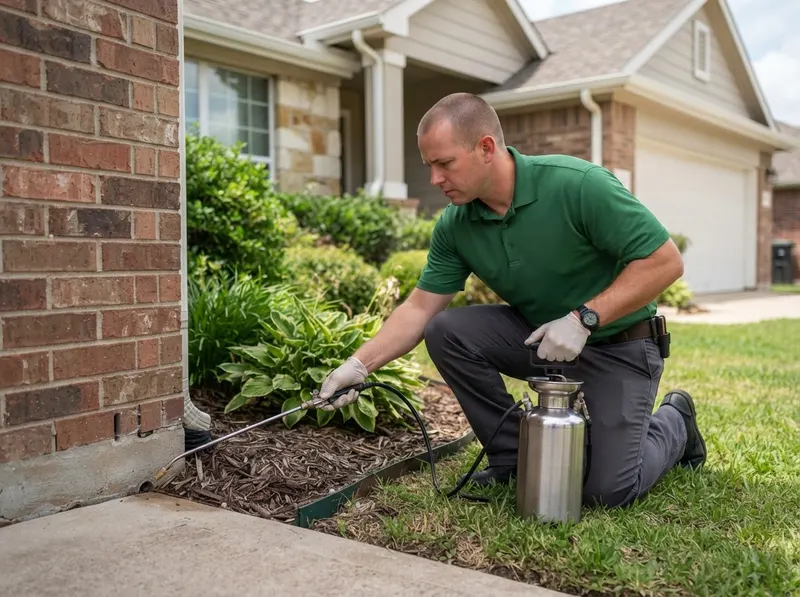
Scheduled exterior perimeter maintenance delivering sustained insect defense through granular barrier applications, weep-hole inspections, and de-webbing. Every 60-day visit reapplies low-toxicity residual micro-encapsulated compounds around foundation slabs to stop crawling insects before entry. Technicians treat a comprehensive three-foot vertical band up the foundation brickwork and a five-foot horizontal swath across adjacent turf and landscape beds, breaking the biological bridge between raw garden soil and interior living spaces. Eaves, window trim, and entry thresholds are brushed free of spider webs and wasp egg sacs, ensuring continuous structural protection against seasonal pest migrations without long-term binding service contracts.
Get a quote →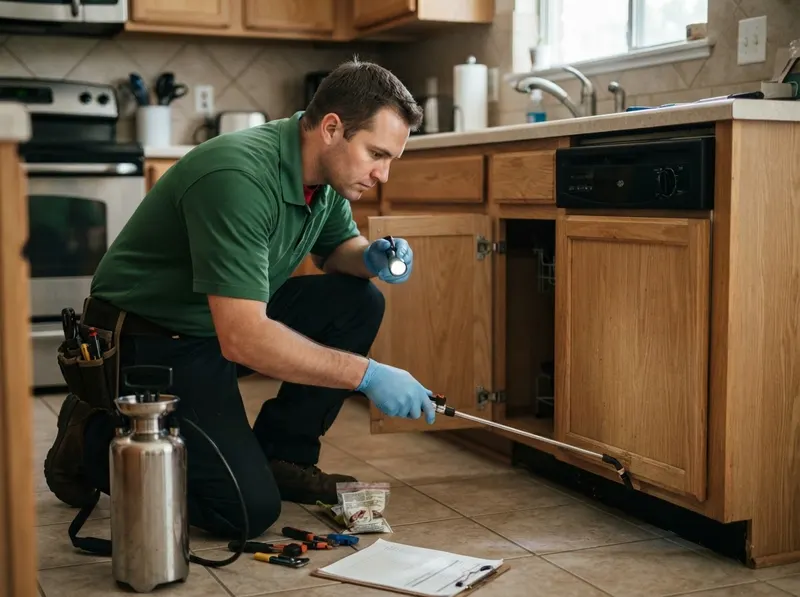
Eradication of both domestic German roaches within kitchen plumbing voids and exterior American roach colonies inhabiting sewer-adjacent perimeter beds. Protocols combine non-repellent insect growth regulators, micro-gel bait matrices, and vacuum extraction for clean pantry spaces. Treatment avoids standard repellent pyrethroid sprays that scatter breeding females into interior insulation; instead, targeted chemical formulations disrupt the nymph molting process and allow adults to transfer systemic bait toxins through horizontal transfer throughout hidden wall voids. Technicians service dishwasher kickplates, refrigerator motor housings, cabinet hinge pockets, and wet-wall plumbing lines to eliminate reproductive harborages entirely.
Get a quote →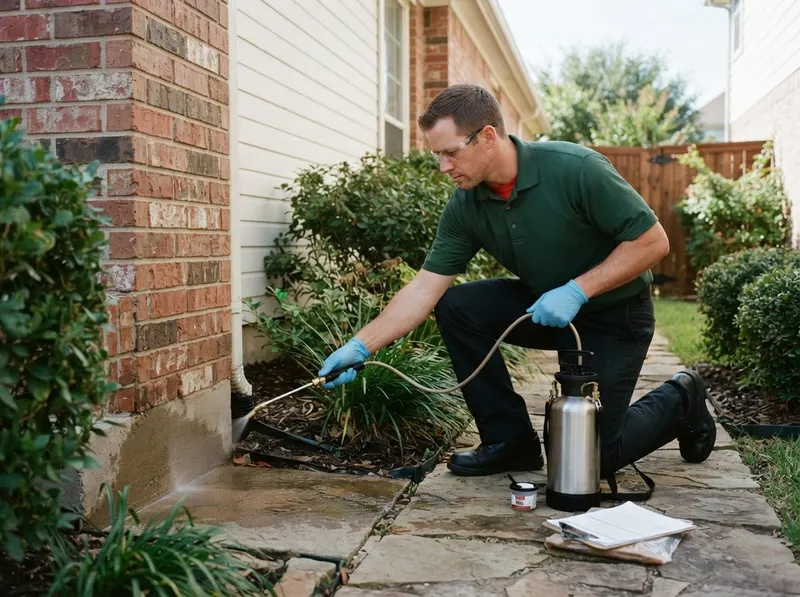
Systemic colony elimination targeting odorous house ants, acrobat ants, and destructive Texas carpenter ants nesting in damp wall studs. Treatments utilize slow-acting, transfer-effect non-repellent formulations that worker ants transport deep into the central brood chambers. Technicians perform exhaustive trailing analyses to trace foraging pathways back to moisture-damaged fascia boards, window framing, or tree canopies contacting shingles. Once the structural satellite colonies and exterior parent nests are mapped, precision applications of non-repellent liquid micro-encapsulates and protein- or sugar-based bait matrices eliminate the egg-laying queen, preventing future colony budding and interior pantry trailing.
Get a quote →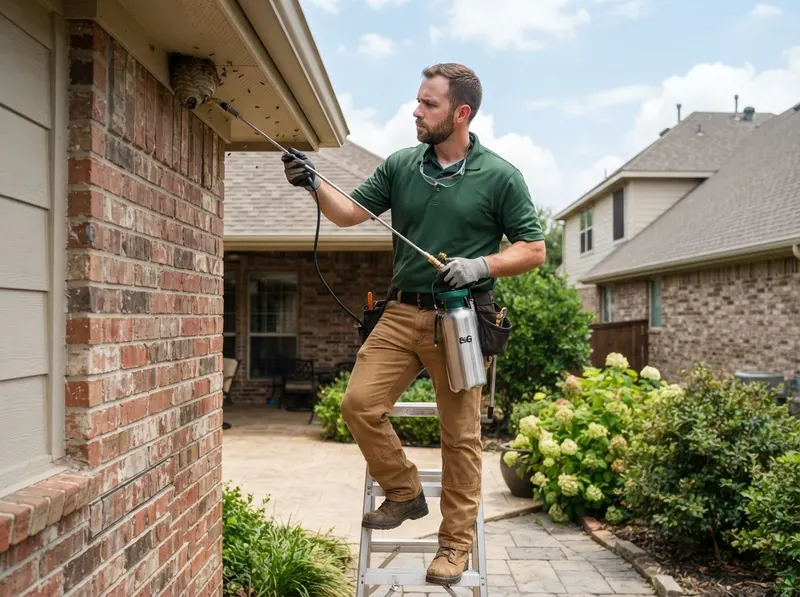
Removal of structural aerial colonies, paper wasp aggregations under fascia boards, and aggressive ground-nesting yellowjacket burrows. Physical nest detachment is accompanied by residual botanical surface treatments that prevent queens from rebuilding in identical roof eaves. Technicians utilize telescoping delivery systems to treat nesting sites at second-story soffits, patio overhangs, chimney flashing, and decorative architectural trim without damaging paint or exterior siding. For subsurface yellowjacket nests in lawn turf or landscape borders, high-pressure low-toxicity dust formulations are injected directly into subterranean tunnel chambers, completely neutralizing defensive worker swarms and terminating the active nest footprint.
Get a quote →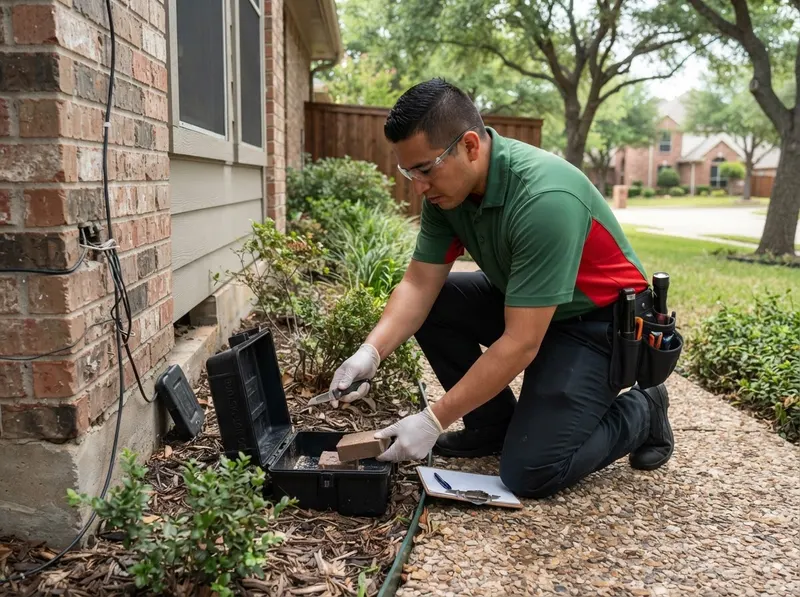
Comprehensive indoor trapping and structural exclusion targeting invasive roof rats nesting within warm attic blown insulation. Technicians deploy tamper-resistant stations and seal exterior entry points using heavy-gauge welded steel hardware cloth and structural polyurethanes. The protocol initiates with a complete thermal imaging and attic traversal assessment to locate runway grease marks, droppings, and compromised wiring harnesses. Snap traps placed strictly along active pheromone runways clear the breeding population within 48 to 72 hours, while technicians mechanically secure roof returns, lead plumbing stack flashings, and crawlspace vents to guarantee long-term exclusion.
Get a quote →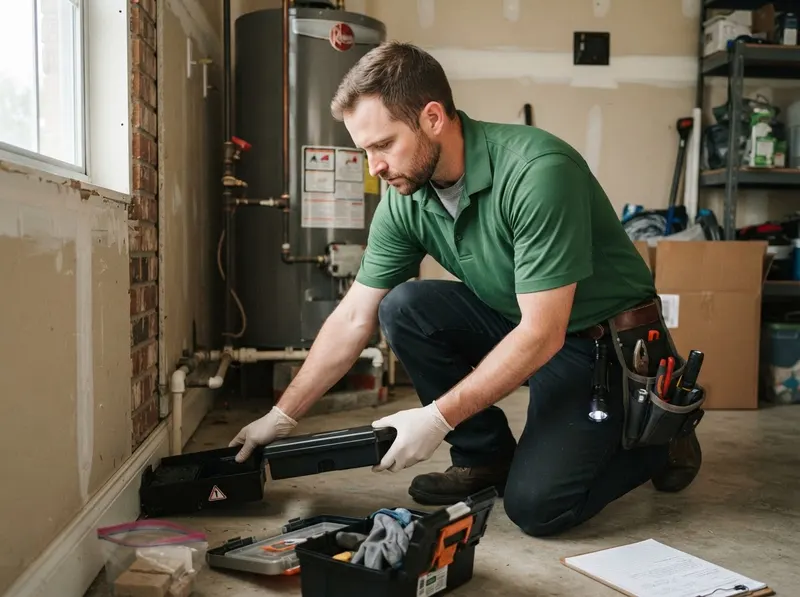
Eradication of house mice exploiting expansion gaps, garage weather-stripping flaws, and utility conduit penetrations. Trapping matrices eliminate indoor breeding populations while physical foundation proofing isolates living quarters from field rodent incursions. Because mice can squeeze through structural openings as narrow as one-quarter inch, technicians systematically inspect air conditioning line chaseways, exterior gas meter entries, and corners of garage door rubber thresholds. Strategic interior mechanical capture grids remove existing animals within days, while copper mesh and specialized pest-grade polyurethanes permanently block secondary field mice from entering kitchen cabinetry and pantry floor registers.
Get a quote →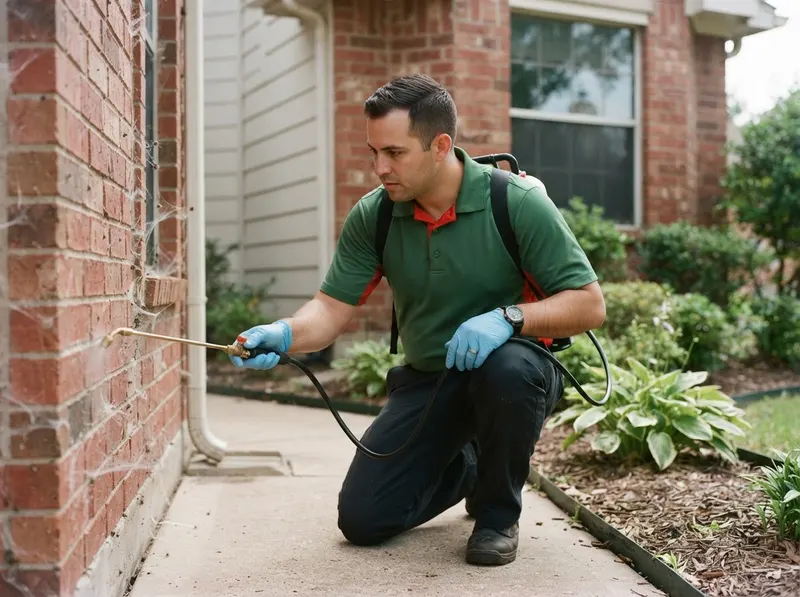
Targeted reduction of venomous black widows, brown recluses, and non-venomous structural spiders harboring within garages, weeping brick veneer, and attic framing. Treatments combine physical web removal with specialized dusting of dark, undisturbed structural voids where web-dwellers feed on secondary insects. Technicians apply long-lasting micro-encapsulated suspensions to crawlspaces, storage areas, and perimeter landscaping borders, directly suppressing the crawling insect populations that serve as primary food sources. Special emphasis is placed on garage storage perimeters, exterior lighting fixtures, and weep holes to break spider harborages and maintain clean living perimeters.
Get a quote →You get a firm, itemized quote for your pest control service before any work begins, no surprises, no pressure.
Careful prep, tidy work, and a full cleanup when we are done. We treat your home and belongings like our own.
The same trusted, background-checked team from the first call to the final check.
Selecting the proper pest intervention requires aligning the biological urgency of the infestation with structural property risks across McKinney neighborhoods. If dealing with a sudden, isolated biological intrusion, such as an active paper wasp aggregate under a second-story gable, a localized wood ant satellite colony behind laundry plumbing, or an emerging cluster of carpet beetles, choose a targeted one-time pest control treatment. If managing recurring perimeter insect migrations driven by Collin County's expanding clay soils, extended summer heat, and damp creek corridors, choose an ongoing bi-monthly exterior defense protocol.
The primary trade-off centers on upfront capital expenditure versus sustained exterior perimeter protection: one-time visits carry a $250 minimum charge and resolve the immediate active crisis without contract commitments, whereas bi-monthly perimeter treatments cost $250 to $375 per cycle but continually reinforce chemical micro-barriers along weep holes and foundation edges before seasonal insects penetrate baseboards and food prep zones. For homeowners discovering night-time scuttling noises inside attic framing or gnawed utility lines, prioritize a dedicated rodent exclusion protocol over basic chemical spraying; chemical barriers do not deter warm-blooded mammals, whereas physical exclusion utilizing heavy-gauge galvanized hardware cloth permanently terminates attic entry routes. For severe interior German cockroach infestations in kitchens, select a multi-stage cleanout incorporating insect growth regulators and micro-gel matrices rather than standard perimeter sprays, as standard repellent formulations cause roaches to scatter deeper into interior drywall voids and electrical outlet boxes.
Every project gets a firm, written price after a free on-site visit. Ranges below for orientation.
Tell us about your pest control service job and we'll send a clear, written quote, usually the same day. Or just call and talk to a real McKinney pro.
(945) 442-2605
Properties across McKinney contend with heavy Houston black clay soils, which expand significantly during spring storms and contract into deep fissures during dry August conditions. This soil shrinkage pulls earth away from concrete slabs, breaking subterranean chemical barriers and creating direct subterranean avenues for termites and field roaches into masonry weep holes. Furthermore, proximity to natural preserves like Heard Natural Science Museum & Wildlife Sanctuary, Towne Lake Recreation Area, and Bonnie Wenk Park exposes surrounding communities like Stonebridge Ranch, Tucker Hill, and Craig Ranch to intense seasonal roof rat migrations along mature tree canopies directly onto residential rooflines. In master-planned developments such as Trinity Falls and Auburn Hills, extensive construction turnover and newly disturbed farm soil dislodge large populations of field mice, acrobat ants, and brown recluse spiders, driving them directly into recently completed residential crawlspaces and brick veneers. In older residential pockets near Historic Downtown McKinney and Chestnut Square Heritage Village, pier-and-beam foundations and historic wood framing present unique structural access points where subterranean termites and carpenter ants compromise damp structural sills adjacent to aged municipal storm drainage pipes along US 380 and Highway 75.
Free estimates for McKinney & the surrounding area.
 Old Mill Pest Control