Residential spider activity across McKinney accelerates during seasonal temperature shifts, particularly when summer heat pushes predatory arachnids toward indoor water lines or autumn drops drive them into…
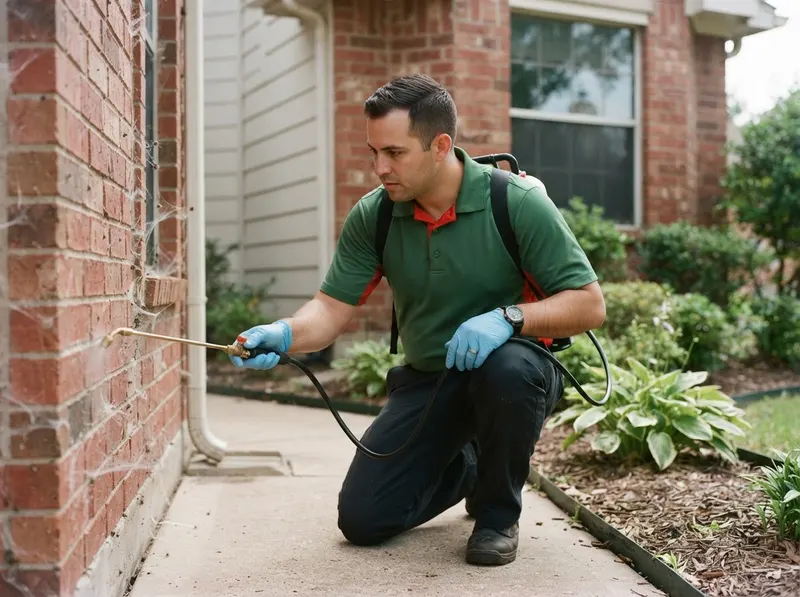
Residential spider activity across McKinney accelerates during seasonal temperature shifts, particularly when summer heat pushes predatory arachnids toward indoor water lines or autumn drops drive them into crawlspaces. In master-planned developments such as Stonebridge Ranch, Tucker Hill, and Trinity Falls, brick-veneer foundations feature open weep holes that serve as primary entry points for southern black widows and wolf spiders seeking crickets and silverfish. Homes bordering water features or heavy woods, such as properties near Mallard Lakes, Hardin Lake, or the Heard Natural Science Museum & Wildlife Sanctuary, frequently experience dense orb-weaver and cobweb spider activity along rooflines, soffits, and exterior lighting fixtures. Historic Pier-and-beam properties near Historic Downtown McKinney and Chestnut Square Heritage Village present distinct challenges, as unsealed crawlspaces and unfinished basement joints offer undisturbed nesting areas for reclusive hunters.
Targeted management relies on resolving the underlying food web rather than depending solely on ambient surface sprays. Because spiders possess long legs that keep their bodies elevated above treated horizontal planes, standard consumer aerosol sprays consistently fail to deliver lethal doses. Professional management implements a dual-stage protocol: mechanical removal of egg sacs containing up to 300 spiderlings each, followed by specialized pyrethroid or botanical microencapsulated barrier dusts applied directly into brick weep cavities, wall voids, and attic insulation perimeters. For isolated brown recluse populations identified in stored garage boxes or quiet closet corners, targeted physical trapping alongside low-toxicity desiccant dusts dehydrates arachnids without aerosolizing toxic chemistry inside family living quarters.
Selecting a single-service intervention fits localized spider sightings following yard renovations or seasonal shifts; whole-structure structural remediation fits heavy, established indoor populations where multiple egg sacs have hatched behind baseboards or within HVAC returns. The operational trade-off centers on treatment depth versus re-entry preparation. Exterior-only perimeter barriers require zero indoor preparation, preserving family routines entirely, yet they leave existing indoor populations untouched. Comprehensive interior structural treatments require vacating treated rooms for 2 to 3 hours while targeted applications dry, yet this approach breaks the breeding cycle immediately. Every service operates with zero required quarterly contracts, ensuring Collin County homeowners pay only for the exact eradication work their property requires.
Every job gets a firm, written price after a free on-site visit.
Tell us about your spider control job in McKinney and we'll send a clear, written quote, usually the same day.
 Old Mill Pest Control