Rat control addresses invasive rodent species that exploit structural gaps around rooflines, soffits, and weep holes across Collin County homes. Roof rats are agile climbers that travel along live oak and pecan…
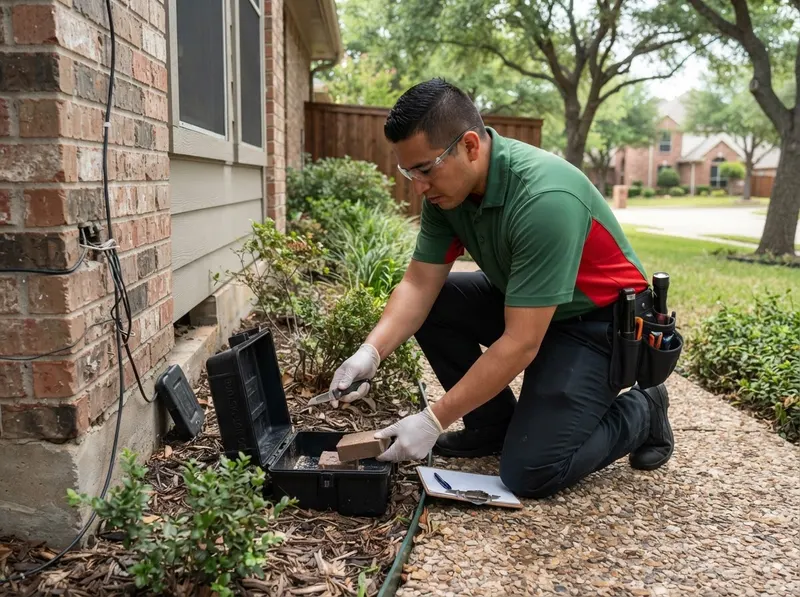
Rat control addresses invasive rodent species that exploit structural gaps around rooflines, soffits, and weep holes across Collin County homes. Roof rats are agile climbers that travel along live oak and pecan branches, commonly entering attic spaces in established neighborhoods like Stonebridge Ranch, Mallard Lakes, and Historic Downtown McKinney. Norway rats typically burrow lower, tunneling along slab foundations, AC line chases, and French drains in master-planned developments such as Craig Ranch and Tucker Hill. A true structural resolution differs from open-market retail bait stations: rat control relies on an integrated physical sequence including complete attic mapping, snap-trap staging away from domestic living areas, and sealing every breach larger than 0.5 inches with steel mesh and elastomeric sealant.
Choosing targeted rat control over general exterior perimeter spraying is essential when physical evidence appears inside sheetrock or ceiling cavities. Chemical perimeter sprays do not interrupt attic nesting or prevent gnawing on internal electrical wiring. While exterior broadcast baiting reduces landscape field populations, placing loose rodenticide blocks inside interior attics introduces severe trade-offs: poisoned rodents frequently expire inside inaccessible wall voids, producing biohazard decomposition odors that persist for 21 to 30 days. Mechanical trapping combined with exterior exclusion confines the eradication process to accessible service areas, protecting indoor air quality and preventing domestic pets from encountering poisoned carcasses.
Local architectural features in McKinney directly influence structural vulnerability. S-tile roofing in Adriatica Village and high-pitched custom rooflines in Auburn Hills and Hardin Lake create natural apex gaps where fascia boards meet roof decking. Along northern boundaries like Trinity Falls, proximity to the East Fork Trinity River corridor and agricultural greenbelts increases seasonal rodent migration into domestic heating vents between October and February. Technicians conduct complete perimeter walk-throughs to verify chew marks, track paths, and rub marks along ridge vents, chimney flashings, and crawlspace vents before confirming the exact restorative scope on-site.
Every job gets a firm, written price after a free on-site visit.
Tell us about your rat control job in McKinney and we'll send a clear, written quote, usually the same day.
 Old Mill Pest Control